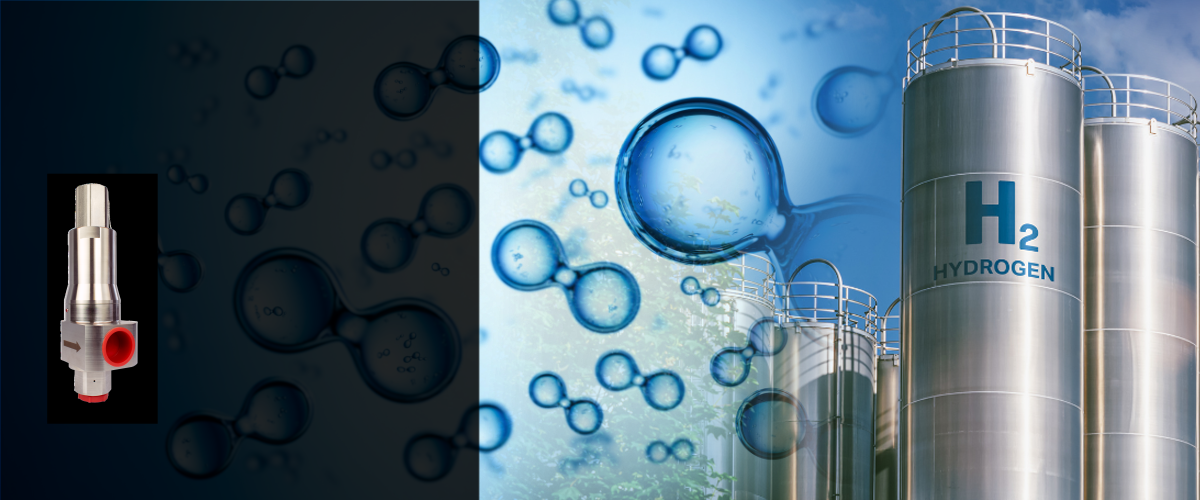
Hydrogen systems are growing in the United Kingdom and across the globe, from hydrogen production sites to refuelling stations and fuel cell system projects. Depending on the project, a key part of each system are hydrogen gas valves. Choosing the right valve helps reduce leak risk and keep the system within its required operating conditions.
There are challenges that come with the use of hydrogen. One of them being if hydrogen leaks and mixes with air, it can ignite from a small spark, hot surface or other ignition sources. A road transport incident in Japan in September 2025 showed how serious a hydrogen-related emergency can become. A lorry carrying compressed hydrogen cylinders overturned, a fire developed, and the highway was closed for 11 hours. Unfortunately, the exact role of the hydrogen cylinders was reported as unclear. The incident shows why hydrogen systems, storage, transport, valve selection and emergency planning need careful consideration.
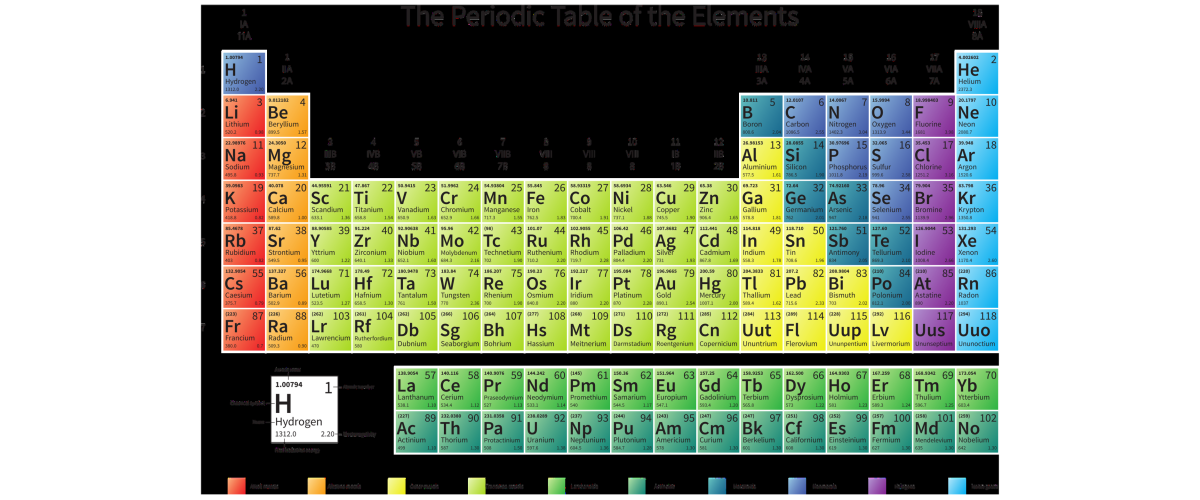
Why Hydrogen is Difficult to Contain
When it comes to containing hydrogen, its molecules are extremely small and the gas spreads quickly. This makes it easier for hydrogen to escape through very small gaps around connections, seats, seals, packing and fittings. This is why a valve that works well with another gas may not seal as well when used with hydrogen. So, how do manufacturers conduct their phased testing of valves for hydrogen gas applications in a safe manner?
Well, helium is often used for leak testing because it is non-flammable and can help show very small leaks in leak detection tests. Saying that, helium testing does not mean the valve is automatically suitable for hydrogen. The valve still needs to be checked against the pressure, temperature, materials and working conditions of hydrogen systems. Which is why hydrogen valve selection needs to look beyond the valve type. Think about the body material, wetted parts, sealing design, connection method and test evidence. They are all important when investing in a valve to install in pipework or pressure systems that work with hydrogen.
Materials for Hydrogen Service
Hydrogen can damage some metals through a process called hydrogen embrittlement. Basically, hydrogen can get into susceptible metals and make them less able to cope with stress. This, in turn, means the metal can lose toughness, crack more easily, and once a crack starts, hydrogen can penetrate it and can contribute to crack growth.
That’s why such risk must not be ignored for valve parts that come under load or are exposed to hydrogen. Such as stems, springs, seats and other wetted parts.
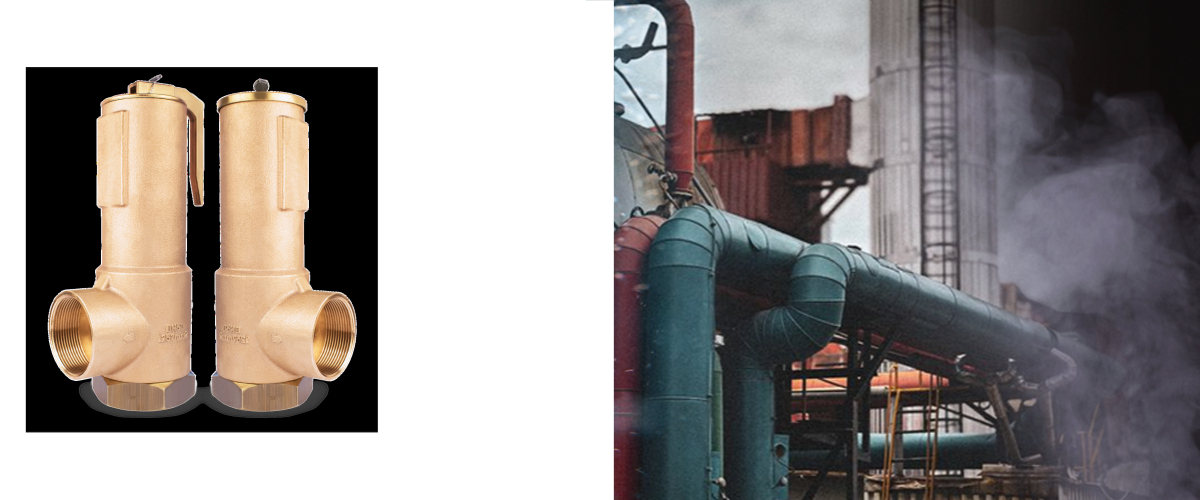
First, look at the valve body and the parts that come into contact with hydrogen. For example, many hydrogen systems use stainless steels such as 316 or 316L, as seen in our High-Pressure Safety Relief Valve. In particular, these materials usually offer better resistance to hydrogen embrittlement than many carbon steels. However, material suitability still depends on the pressure, temperature, stress level and working conditions of the system.
Ask your valve supplier what the hydrogen-facing parts are made from, not just the valve body. Stems, springs, seats, and other internal parts all need to be suitable for hydrogen service.
Next, look at soft parts such as seals and packing. These should be rated for the pressure, temperature and medium purity of the system. For cold systems, check the low-temperature rating. Similarly, for high-pressure systems, check extrusion resistance and leak performance.
Material choice also links to the valve’s duty cycle. Therefore, if a valve opens and closes many times a day. It may need different seat materials, stem design and sealing arrangements from a valve that stays open for long periods.

How a Valve Controls the Flow
A simple way of explaining this is that a valve controls the flow by opening, closing, or restricting the passage. Some valves are built for switching between parallel safety valves, such as change-over valves. These allow one safety valve to be taken out of service for maintenance while the other remains available, without shutting down the process. Some valves are for fine control, and some for one-way protection. Subsequently, matching the valve type to the job is part of making the pressure system safe to work with.
Common Valve Types and Where They Fit
- Isolation valves (on/off): A typical use of hydrogen ball valves is for quick shut-off. They suit lines where you need full-bore flow with low pressure drop.
- Fine metering: Hydrogen needle valves tend to be used where you need small, steady changes to the flow of hydrogen gas. They suit sampling, purge lines, and instrument runs.
- Backflow protection: Hydrogen check valves allow flow in one direction and block reverse flow. They are commonly used between compressors, storage banks and other parts of the pressure system where backflow needs to be prevented.
- Automatic shut-off and sequencing: Direct-acting solenoid valves provide fast on/off control in smaller lines. Pilot-operated solenoid valves suit applications where the line size or pressure drop calls for a different design.
- Modulating control: A control valve is used where you need to hold a set pressure or flow under changing demand. This matters in hydrogen production skids, blending, and some fuel cell system balance-of-plant layouts.
Valves Around Storage Tanks and High-Pressure Banks
Storage tanks and high-pressure banks need layers of protection. Your design may include:
- Shut-off valves to isolate sections for service or emergency response.
- Non-return protection using hydrogen check valves to stop reverse flow between banks.
- Pressure control using regulators or a control valve to manage set points.
- Overpressure protection using a pressure relief valve sized for the worst-case event.
A pressure relief valve is not a flow control device; it’s a safety device. Set pressure, discharge path and vent location all need review. Moreover, relief systems need a suitable discharge location, with hazardous areas, personnel exposure and ignition sources considered as part of the system design.
Design Points that Reduce Leaks
- Seat and stem design: Look for designs that give tight shut-off at your full pressure range.
- Connections: Use fittings and threads rated for hydrogen and the pressure class. Assembly method matters as much as the parts.
- Surface finish and tolerances: Hydrogen needs good machining and clean sealing faces.
- Cleanliness: Keep oil, dirt, and tape fragments out of the system. Contamination can damage seats and cause leaks.
Standards, Hazardous Areas, and Site Rules
For hydrogen projects, your team must follow the site rules, pressure equipment requirements and hazardous area controls that apply to the installation location.
That’s why you must assess any area where hydrogen could mix with air and create an explosive atmosphere before selecting equipment. This may include hazardous area zoning, such as Zone 0, Zone 1 or Zone 2 for gases, depending on how likely an explosive atmosphere is and how long it could remain present.
In the UK, DSEAR sets the workplace requirements for managing explosive-atmosphere risks. Suppliers and installers must also check that equipment for potentially explosive atmospheres meets the product marking and certification requirements for the market they supply or install it in. When you look at Great Britain, this may include Ex marking and the appropriate CE or UKCA conformity marking, depending on the product and certification route. Other markets may have different requirements, including ATEX requirements within the EU, IECEx or other local Ex approvals.
Any equipment used in a hazardous area needs to be suitable for that environment. This includes electrical parts such as valve coils, positioners, limit switches and wiring near vents or possible release points. Your team should also assess mechanical equipment that could create an ignition risk. Select valves whose materials, pressure and temperature ratings, sealing arrangements and test evidence demonstrate suitability for the intended hydrogen service. Ask for evidence of pressure rating, leak tests, material suitability and temperature range where possible. Make sure the valve datasheet matches the pressure, temperature, material, leak testing, approval and site requirements for your project.
Maintenance and Checks
Hydrogen systems need planned inspection because leaks can be small but still create risk in enclosed areas. Therefore, your team should carry out the following checks or ask a company like Seetru Engineering Services to conduct them for you to be on the safe side and get accurate feedback:
- Leak testing: Use approved leak detection methods for hydrogen. Document results and track trends.
- Torque control: Follow the maker’s limits on stem packing and bolts. Over-tightening can damage seals and raise leak risk.
- Cycle testing: For valves that switch many times, check wear and response time. This includes direct-acting solenoid valves and pilot-operated solenoid valves.
- Spare parts: Keep seats, seals, and coil kits that match the exact valve build.
Quick Selection Checklist
To begin, define the role the hydrogen gas valve needs to perform, the conditions it will work in and the safety requirements around the system, as these details should guide the rest of the selection process.
Check material compatibility, sealing design, leak test evidence, hazardous area needs and overpressure protection. Use the downloadable checklist for a quick review of the main points to consider across hydrogen storage, transfer, refuelling and fuel cell systems.
Please note that this Hydrogen Valve Selection Checklist is for general guidance purposes only and should be used as a starting point. You should check final valve selection against your system design, site rules, valve datasheet, supplier documentation and applicable regulations.
Final Thoughts…
Preparation matters in most areas of life. It matters even more when you are choosing equipment that supports the safety of your team, site and pressure system.
When you are investing in a hydrogen gas valve, your valve supplier needs to understand what the valve must do and the conditions it will work under. That includes the pressure system, pipework, medium, connection type, flow rate, temperature, installation location and any hazardous area requirements.
The clearer this information is at the start, the easier it is for your supplier to recommend hydrogen gas valves that match your system, safety requirements and working conditions.
Get in touch with us to discuss your hydrogen gas valve requirements.
FAQs
Select your hydrogen service valve for the pressure, temperature, flow rate and duty cycle of the system. Key safety features include hydrogen-compatible body and wetted-part materials, suitable seals and packing, tight shut-off performance, pressure-rated connections and evidence of leak testing. Don’t forget to ask your supplier for test certificates.
For automated systems, check whether the valve needs fail-safe shut-off, position indication, suitable electrical certification and compatibility with the site’s hazardous area classification. In high-pressure hydrogen systems, check valves, excess flow valves, shut-off valves, pressure relief valves and flow control valves may all form part of the wider pressure system and pipework.
In a hydrogen fuel cell system, hydrogen gas valves control hydrogen supply, isolation, pressure regulation and purging. A shut-off valve stops hydrogen flow when the system is off or when the control system detects a fault. Pressure regulators and control valves help manage the hydrogen pressure entering the fuel cell stack. Check valves help prevent reverse flow, while purge valves help remove residual hydrogen, water or inert gas from parts of the system.
In a proton exchange membrane fuel cell, the system supplies hydrogen to the anode side of the stack, where a catalyst splits the hydrogen molecules into protons and electrons. The fuel cell then uses that reaction to produce electricity, with water as the main by-product. Depending on the valve type, it plays a role in keeping the hydrogen supply stable, controlled, and isolated.
When selecting a hydrogen fuel cell valve, start with the job the valve needs to do. A shut-off valve, check valve, purge valve, pressure regulator, proportional control valve and pressure relief valve all have different roles in the system.
The main selection points are pressure rating, temperature range, hydrogen compatibility, leak-tightness, flow capacity, response time, cycle life, electrical specification and connection type. The valve materials should be suitable for hydrogen service, including the body, wetted parts, seat, stem, and seals.
For fuel cell systems, space, weight, power consumption and response time can also matter, especially in vehicle or mobile applications. If the system uses electrical components near hydrogen, check the site or system hazardous area requirements and make sure the valve suits the operating environment.
A good hydrogen fuel cell valve should support safe isolation, stable pressure or flow control, low leakage and stable working performance for your pressure system.