When Do Liquid Level Gauges Need to Be SOLAS Compliant

Even the smallest component on a marine vessel can cause inspection failure. For example, if your liquid level gauge isn’t SOLAS compliant where it should be, the result can be project delays, extra costs, and questions over your crew’s safety.

The point of this article is to show you when SOLAS compliancy is required for liquid level gauges, what the standards mean in practice, and which Seetru gauges carry the approvals you need as a shipbuilder or engineer.

What is SOLAS?

SOLAS stands for the International Convention for the Safety of Life at Sea. It’s the main set of international rules that keep ships, crews, and passengers safe. The convention is managed by the International Maritime Organization (IMO), which is part of the United Nations.

The first version of SOLAS was first adopted in 1914 as a direct response to the Titanic disaster in 1912. However, it didn’t come into force in 1915 as originally planned due to the First World War.

An illustrated depiction of the Titanic sailing at night, surrounded by stars and an iceberg, with smoke billowing from its stacks.

Subsequent versions were adopted in 1929 (entered into force in 1933), 1948 (entered into force in 1965), and 1960 (entered into force in 1965). The current version in use is the SOLAS Convention of 1974, which was adopted on 1 November 1974 and came into force on 25 May 1980 after ratification by enough countries. This 1974 convention introduced a new amendment procedure that allows for faster updates to the rules.

Since the 1980s, the rules have been updated many times to cover modern shipping risks. Today, SOLAS covers almost every area of ship safety, from fire protection and lifeboats to structural design and, of course, equipment like liquid level gauges.

Why should this be important to you? If you’re building or running a ship, SOLAS is a legal requirement, and inspectors can check your gauges and other components during surveys. If a gauge should be SOLAS compliant and isn’t, the ship can be held back until the issue is fixed. That means time lost, additional cost, and possible reputational damage.

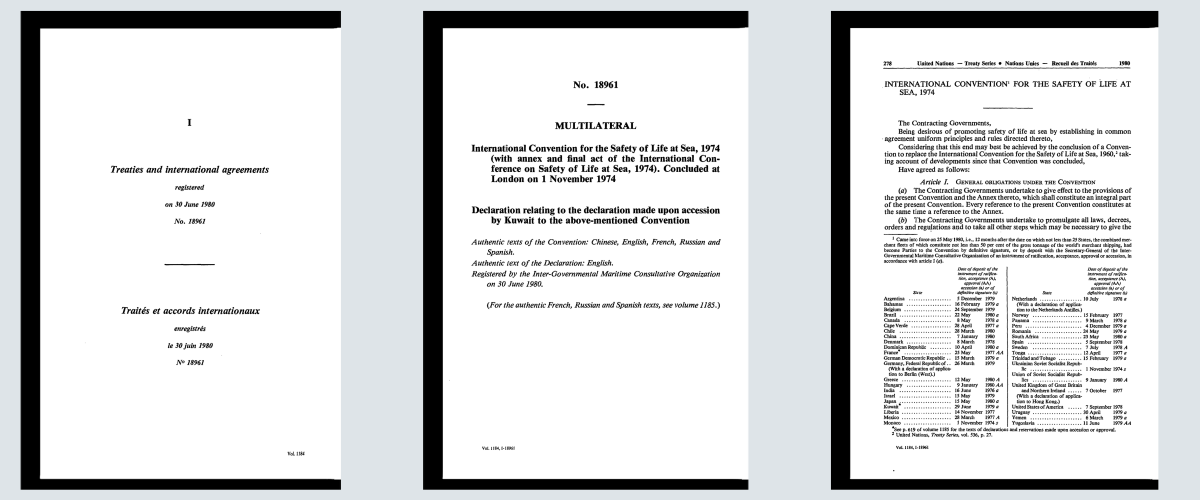
Treaties and international agreements - International Convention for the Safety of Life at Sea, 1974 .

Why do some Liquid Level Gauges Need to be SOLAS Compliant?

It really depends on the type of liquid the gauge is measuring and the safety risks involved. Which is why not all liquid level gauges on board a ship require to be SOLAS compliant.

If a gauge is used on tanks carrying flammable or hazardous liquids, like fuel or certain chemicals, it must adhere to SOLAS rules. These gauges need to meet tough international safety standards to make sure they won’t cause sparks or leaks that could lead to fires or explosions. They also have to be robust and reliable because a wrong reading could spell disaster for the vessel and crew.

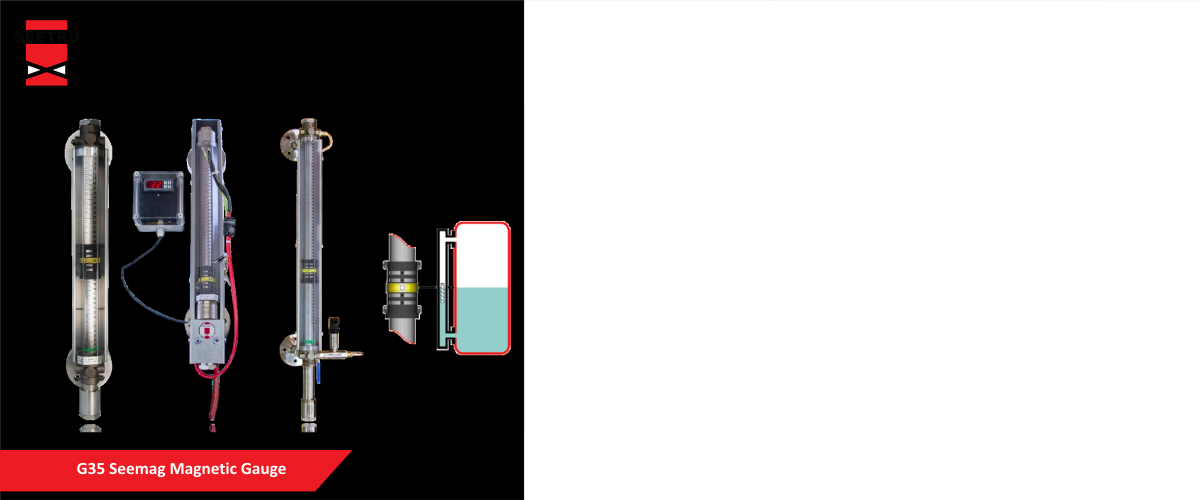
That’s why gauges like Seetru’s G35 Seemag magnetic gauge or the G31 Seeflex reflex gauge come with multiple approvals from major classification societies. Making them SOLAS compliant. They’re designed specifically for those important high-risk applications.

On the other hand, gauges that measure less risky liquids or are used in different industries might not need to be SOLAS compliant.

For example, Seetru’s G21 Tubular Marine Gauge is a heavy duty liquid level gauge for marine and offshore industries. As it has a tubular design, this gauge is suitable for use with non-flammable liquids only. Therefore, it doesn’t need to be SOLAS compliant. It’s a liquid level gauge that is commonly used for water storage and coolant tanks on cargo ships, tugs and military ships.

Documented requirements focused on meeting SOLAS compliance for maritime safety and operational effectiveness.

What Does SOLAS Require from You and Your Liquid Level Gauges?

As previously covered, the International Convention for the Safety of Life at Sea requires that gauges on tanks holding flammable liquids, like fuel or hydraulic oils. Must be designed to prevent any risk of fire, explosion, or leaking dangerous substances. These gauges undergo rigorous tests to make sure they can operate well under harsh conditions. These tests cover pressure, wide temperature ranges, and exposure to vibration and rough seas.

The gauge’s construction is also checked to confirm it won’t fail or give false readings. That’s done because inaccurate level information could lead to overfilling, leaks, or unsafe operating conditions. Features like self-closing valves, sealed electrical parts, and robust mechanical design are essential requirements.

Additionally, SOLAS rules often require that gauges can be maintained or replaced in a safe manner while tanks are in service, without the risk of releasing cargo or fuel. Some gauges must also meet standards for explosion-proof electrical equipment (such as IEC 60079-series which covers safety requirements for electrical devices used in explosive atmospheres), depending on their design and location on the vessel.

Type approvals for gauges come from classification organisations like Lloyd’s Register, DNV, ABS, and Nippon Kaiji Kyokai (Class NK). They witness testing, review documentation, and certify compliance before issuing certificates.

This thorough approval process ensures that when a liquid level gauge is certified as SOLAS compliant (or carries the Wheelmark), shipbuilders and operators can trust its build quality, reliability, and reading accuracy. This commitment is essential for avoiding inspection failures, delays, or safety incidents at sea.

Seetru’s G31 Seeflex and G35 Seemag gauges are examples that satisfy these stringent SOLAS requirements and hold multiple type approvals, making them trusted choices for marine applications involving fuels and other hazardous liquids.

You can find more about our liquid level gauge approvals here.

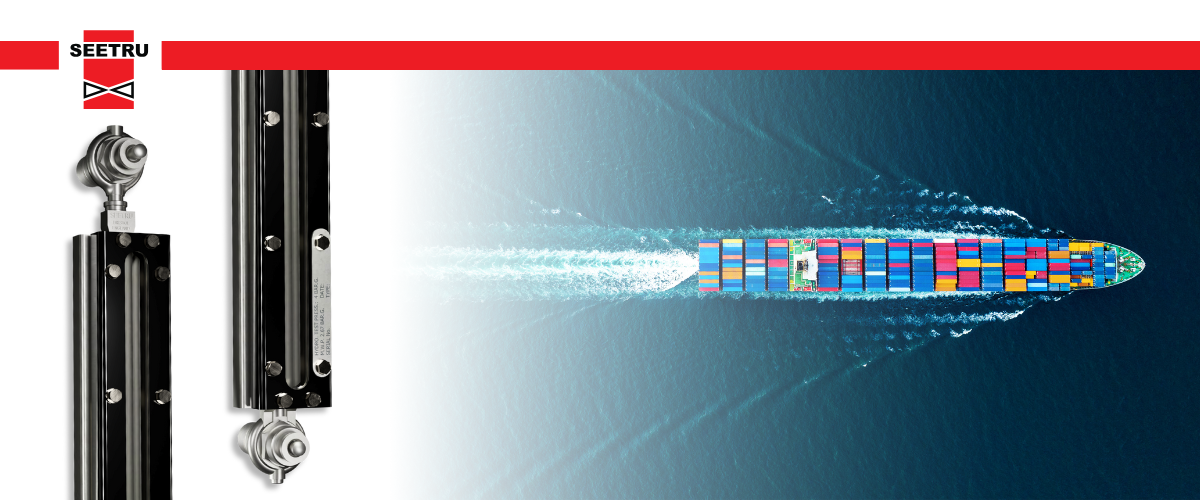
A shipping vessel heavily loaded with colourful containers sails through blue waters, alongside SEETRU’s G31 liquid level gauge.

How Do You Know if Your Liquid Level Gauge is SOLAS Compliant?

The simplest way to check if your liquid level gauge is SOLAS compliant is to look for the type approval certificates issued by recognised classification organisations, like the ones mentioned earlier on. They are independent organisations that test and certify gauges to meet SOLAS safety standards.

Manufacturers like us usually provide copies of these certificates along with the product documentation or list their approved gauges on their websites.

For example, our G31 Seeflex and G35 Seemag gauges are widely recognised with SOLAS type approvals and certifications from multiple organisations. You can also look for marks or labels on the gauge itself indicating compliance. These may include certification symbols or serial numbers traceable to a testing report.

Lastly, when you’re looking to buy a liquid level gauge, always ask your supplier for proof of said certifications that prove the gauge is SOLAS compliant. This is especially important if you will be using the gauge on your ship or workboat to monitor flammable liquids. It also applies to other tanks that hold flammable or important liquids covered by SOLAS rules. This protects you from dealing with inspection failures and ensures compliance with international maritime law.

Final Thoughts…

By making sure your liquid level gauges meet IMO’s SOLAS rules, you help protect everyone on board your vessel. This reduces the chance of things going wrong at sea during your journey. These approvals show the equipment has passed strict safety tests and meets international maritime regulations.

Whether you work on cargo ships, offshore platforms, or luxury yachts, choosing a liquid level gauge that is SOLAS compliant where it needs to be helps you avoid inspection delays and safety risks. That’s why manufacturers like Seetru, offer various gauges certified by major classification organisations worldwide.

Keep in mind, rules can change a little for different ships and countries. So, to be sure your gauge is right for your vessel, always check the latest advice from your ship’s class society or ask a surveyor before you buy.


FAQ section for SOLAS compliant liquid level gauges

Does SOLAS apply to all tanks on board your vessel?

Not every single tank on board a vessel falls under SOLAS rules. SOLAS mainly focuses on safety, it applies to tanks that are linked to the ship’s operation, stability, and fuel systems. This means fuel tanks, ballast tanks, and other important service tanks are covered.
 
It’s not only big cargo ships and workboats that need to follow the rules. Luxury yachts like sailing yachts, and sport yachts, etc. They also come under SOLAS if they are over a certain size and/or carry passengers commercially. Whether you’re running a large commercial ship or a sleek private yacht. Your key tanks will need gauges that meet SOLAS requirements.

Do SOLAS compliant gauges need more maintenance?

No, not really. A liquid level gauge that is SOLAS compliant doesn’t mean extra work for you. The approval simply means the gauge has been tested to meet strict international safety rules. Once installed, the maintenance is about the same as with any other high-quality liquid level gauge.
 
What makes the difference is sticking to a proper inspection schedule. Regular checks keep gauges accurate and working as intended. If you already look after your equipment, adding a SOLAS compliant gauge won’t feel any different.

Are SOLAS rules the same for cargo ships and passenger ships?

The basic safety principles are the same, but some rules do change depending on the type of vessel. Cargo ships and passenger ships both need to follow the SOLAS framework, but passenger ships usually face stricter requirements. This is because they carry people rather than cargo, so the risk to life is higher.

For example, a large cruise ship must have more detailed safety systems in place than a bulk carrier.
But in both cases, the goal of SOLAS is the same:
to make sure the vessel is safe to run and that liquid level gauges and other equipment can be relied on in an emergency.

Seetru Reflects on Hydrogen Technology Expo Europe 2025

Once again, we’re proud and excited to be part of the Hydrogen Technology World Expo Europe 2025. It was a great pleasure to be there last year doing what we do best. Helping you work with hydrogen in a safe manner, protecting your team and business.

This year’s event takes place from the 21st to the 23rd of October at Hamburg Messe. It’s shaping up to be quite an event with key speakers like Anke Alvermann-Schuler from Gasunie Deutschland,  and Mohamed A.Elreheem from Aramco and many more!

It’s going to be another fantastic year at the Hydrogen Technology World Expo Europe 2025 for anyone working in the hydrogen industry. From engineers to safety specialists and industry leaders. This is the place where important conversations will be taking place about the future of clean energy.

As the push for greener fuel grows stronger, keeping your people, equipment and business safe is at the forefront of everything we do. That’s why we’re looking forward to sharing some of the work we’ve been doing. This includes our excellent range of hydrogen safety valves.

We’ve been part of this conversation for years, and we’re proud to share what we know, while also learning from others. This year won’t be any different. So, if you’re heading to Hamburg too, we’d love to say hello.

Why We’re Going to the Hydrogen Technology Expo Europe 2025

Safety in the industries we work with is something of great importance to us, as lives and projects that are part of the future are at stake. The safety within the hydrogen industry is no different. We always aim to do our best because it helps protect lives, equipment and the future of cleaner energy. 

Events like these are excellent, not only for showing what we’re working on at Seetru. They’re an opportunity to network and connect with people. The people who work with hydrogen every day. To meet the engineers, safety leads and decision-makers who work with hydrogen every day and deal with its challenges.

The conversations that are had at the Hydrogen Technology Expo, help us understand the best way to support you, what you look for in safety valves, and where our hydrogen valves make a difference. That’s the kind of feedback that impacts what we do and makes our products better for everyone.

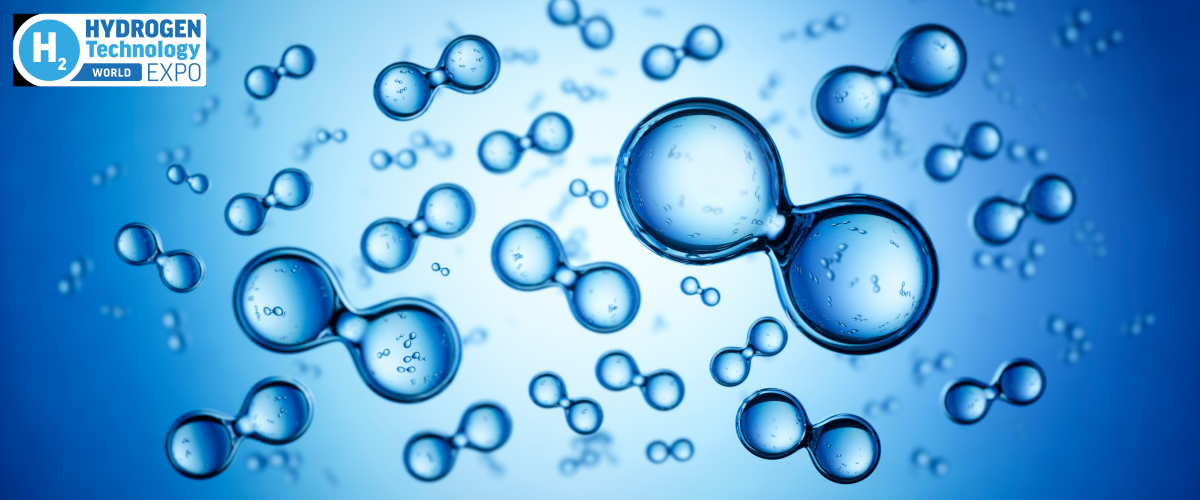
A scientific illustration of hydrogen molecules in blue hues, symbolizing the Hydrogen Technology World Expo and innovation in clean energy.

What Are We Bringing to the Hydrogen Technology World Expo

For this year’s Hydrogen Technology Expo, we’ll be bringing along a handpicked selection from our hydrogen valve range. Each one is built to deal with different pressure requirements and challenges.

Some of the valves that will be on show are built to handle a range of needs and challenges you may face in the hydrogen industry. The valves that will be on display cover a wide pressure range, from 0.2 bar to 1100.0 bar. Providing you with a selection of safety valves for applications across all stages of the hydrogen supply chain.

Starting with the Type 95605 / 956H5. This is a Seetru safety valve engineered to deal with the high pressures in hydrogen filling and dispensing. We have a variant of this valve available for liquid hydrogen applications (contact us for detailed pressure ratings), making it an excellent choice for hydrogen storage and transportation.

At our booth you’ll also be able to see Type 34410, a valve that provides overpressure protection in hydrogen production and compression systems. You’ll also see Type 646, a safety valve that is versatile and all-round solution well suited to compression, storage, and purification applications in the hydrogen industry.

Finally, let’s not forget about the Type 946 Flanged safety valve. Made for hydrogen systems with flanged connections. It is straightforward to install and gives you the performance you and your team can rely on.

These won’t be the only hydrogen safety valves we’ll be sharing with you at the hydrogen expo. If you’re after something specific or want to chat about how our valves could help you with your setup. Our team consisting of Edward Flint and Lloyd Carless will be at the stand and happy to talk with you.

You can also browse our full range of hydrogen safety valves here.

What This Means for Your Business

Whether you’re working on new hydrogen projects or managing ones already in place. The right safety valve helps things run well, safer, and with less potential for unwelcome interruptions that can put lives at risk. We understand how important that is when time, money and people’s safety are on the line.

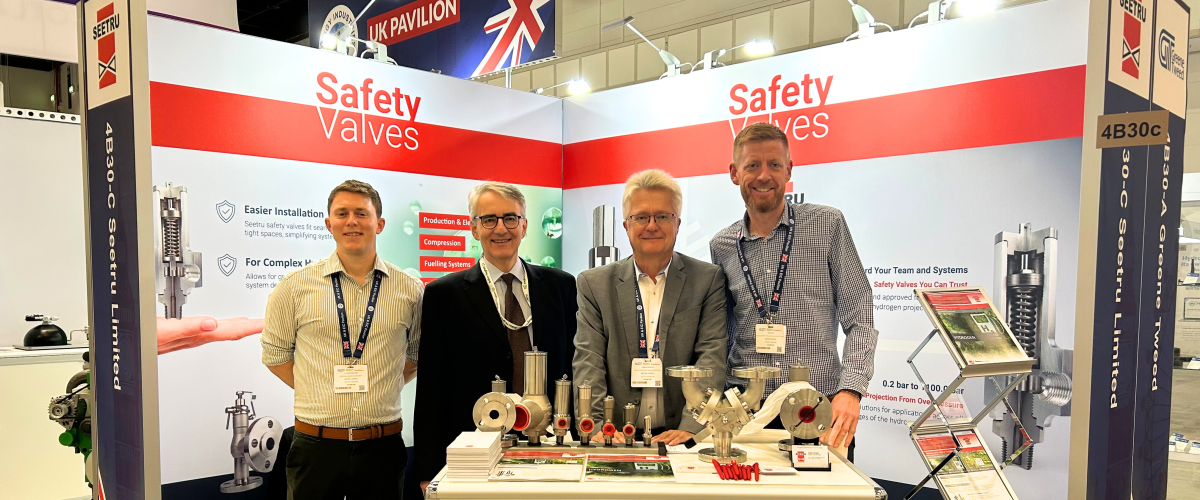
Seetru team members Lloyd Carless, Heino Kuchta and Edward Flint. As well as Seetru's Managing Director, Andrew Varga at Hydrogen Technology World Expo 2025

Takeaways From the Hydrogen Tech World Expo 2025

Our team had a very successful few days at the Hydrogen Technology World Expo 2025 in Hamburg, Germany.

Edward Flint and Lloyd Carless met with many customers, both new and old. It was great talking about all the new hydrogen projects happening around us and the latest technological developments. It was encouraging to see so many businesses now active in the hydrogen industry. All focused on moving the industry forward.

They were joined by our EU Authorised Representative, Heino Kuchta, and Managing Director, Andrew Varga. Everyone enjoyed meeting people from across the hydrogen industry. From hydrogen production, to storage, infrastructure, fuel cells and more. The Seetru team spent their time networking, sharing ideas and discussing how we help maintain safety by providing safety valves that protect people, businesses, and the environment.

We look forward to continuing our support of the hydrogen industry as it grows.


FAQ section for the Hydrogen World Tech Expo

Where can we find other events Seetru representatives are attending?

For updates or information on the events our Seetru representatives will be attending in the future. Please visit our Trade Shows and Events page and keep an eye out on our company LinkedIn.

How can I get in touch with Seetru?

You can get in touch with us via our contact us page. There you’ll be able to fill in a form, send us an email or find the number to call us directly.

GH2 India Event and Our Endorsed Hydrogen Valves

If you’re working in the hydrogen industry, you already know the potential green hydrogen holds. However, you’re also aware of what’s at stake when working with a resource like this. Green hydrogen is considered a zero-emissions energy carrier at the point of use. It is the cleanest form of hydrogen because it’s produced through electrolysis powered by renewable electricity.

However, while there are many advantages to hydrogen. It is a volatile and flammable source that brings challenges with it. Whether you’re working on hydrogen transport, managing procurement or building new hydrogen projects. The quality of the components you use can make or break the outcome. That’s why when you walk into GH2 India this year. You’ll be stepping into a room full of people dealing with the same hydrogen challenges as you and working on solutions for those challenges.

About GH2 India Exhibition and Conference 2025

GH2 India brings together people and companies in the hydrogen industry who are shaping its future impact across India, the wider South Asia region and beyond. The event is held at Yashobhoomi Convention Centre, Dwarka, New Delhi, from the 28th to the 30th of August 2025. It offers a space to explore the latest in hydrogen technology, policy and investment. From project engineers to key decision-makers. It’s an excellent place to network with like-minded people, share ideas, find solutions and work together to move your hydrogen projects forward.

At GH2 India, you can expect exhibitors from a range of backgrounds, including line assemblies, hydrogen fuel cell components and auxiliaries, as well as electrolysers, hydrogen injectors, and companies like ours. Manufacturers of safety valves. All prepared to help you deal with the challenges hydrogen presents, including hydrogen embrittlement.

There is a strong speaker line-up at GH2 India, expected to feature voices like Dr Shivani Sharma, Principal Technical Consultant at Hitachi Energy India. As well as Hisham Mundol, Chief Advisor, India, at the Environmental Defense Fund. Mundol brings insights into India’s climate strategy and its path toward shared, sustainable prosperity.

Of course, these are just two of the many experts set to speak at the event.

A vibrant representation of the Indian flag blends with lush greenery and a hydrogen fuel symbol, highlighting eco-friendly energy.

Investment and Innovation at the Core of India’s Hydrogen Efforts

India has a clear plan in sight and is making great progress in pushing towards a green hydrogen future. The National Green Hydrogen Mission was launched in 2023, fuelled with a government allocation of around ₹19,744 crore (£1.7B GBP / $2.17B USD), with the aim to make India a global leader in hydrogen production, use and export by 2030.

The Indian government has set some ambitious targets with a view on producing 5 million metric tonnes of green hydrogen per year by 2030, powered by over 125GW of renewable energy. It’s also expected to create around 600,000 jobs, reduce fossil fuel imports and cut India’s annual greenhouse gas emissions by nearly 50 million tonnes.

As of March 2025, India has awarded contracts for 412,000 tonnes per annum of green hydrogen production capacity and approved 3,000 MW of annual electrolyser manufacturing capacity. Furthermore, in July 2025, India’s first fully indigenous green hydrogen plant launched at Deendayal port (previously known as Kandla port), with plans to scale from 1 MW to 10 MW (megawatts).

Why is this increase important? Well, 1 MW electrolyser plant produces hydrogen using around one megawatt of renewable power. So, scaling from 1MW to 10 MW means increasing the plant’s electrolyser capacity.

There are clear policies set in place for these developments, such as tailored subsidies, fast-tracked approvals and national standards for hydrogen classifications. Regional governments are rolling out their own strategies too, helping early-stage projects get off the ground.

On the infrastructure side, investments are being made. In Gujarat for example, Adani Energy Solutions won a ₹28 billion transmission project to supply green electricity for green hydrogen and ammonia facilities in Mundra. As a further demonstration of India’s effort, transport pilots using hydrogen-powered ferries, buses and hydrogen-powered trucks are already underway!

India’s hydrogen industry is on the rise, and there is no doubt that India is presenting opportunities for manufacturers, engineers, suppliers and project leads to work together in a global effort to build cleaner and safer systems for the future. This is why the Green Hydrogen Summit 2025 in India is the place to be. To discover what is in development with your own eyes and connect with the teams who have a hand in making green hydrogen projects happen.

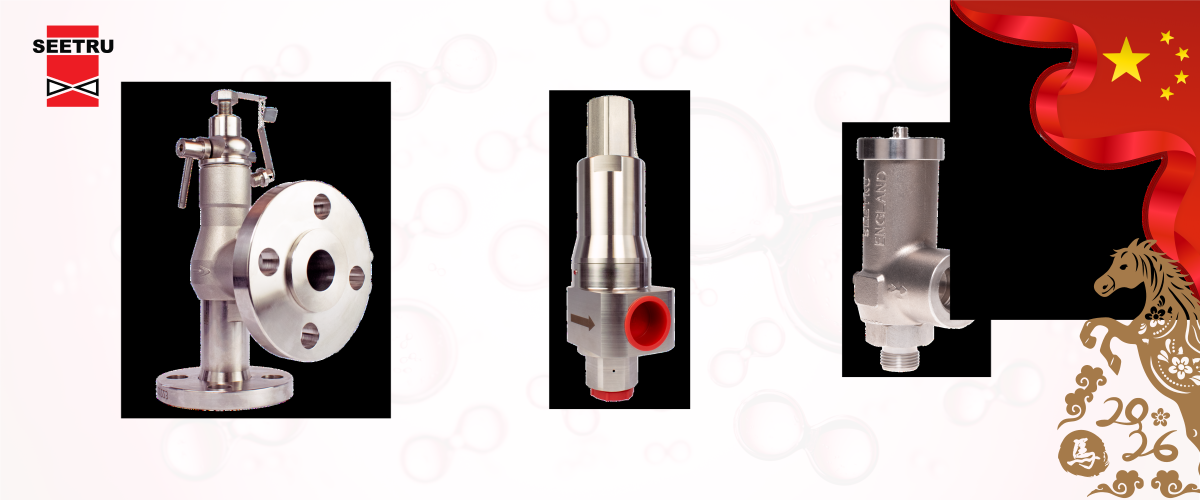
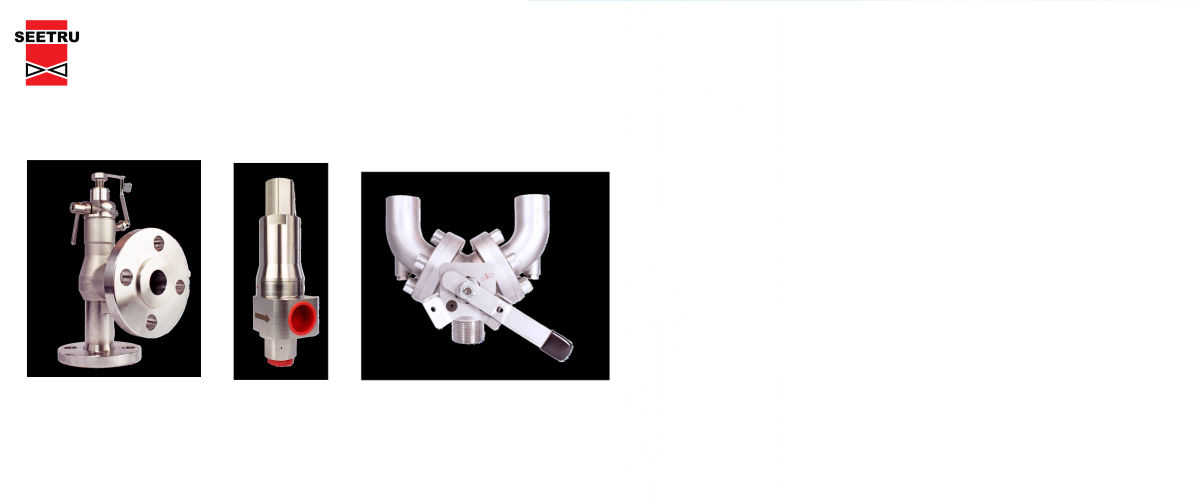
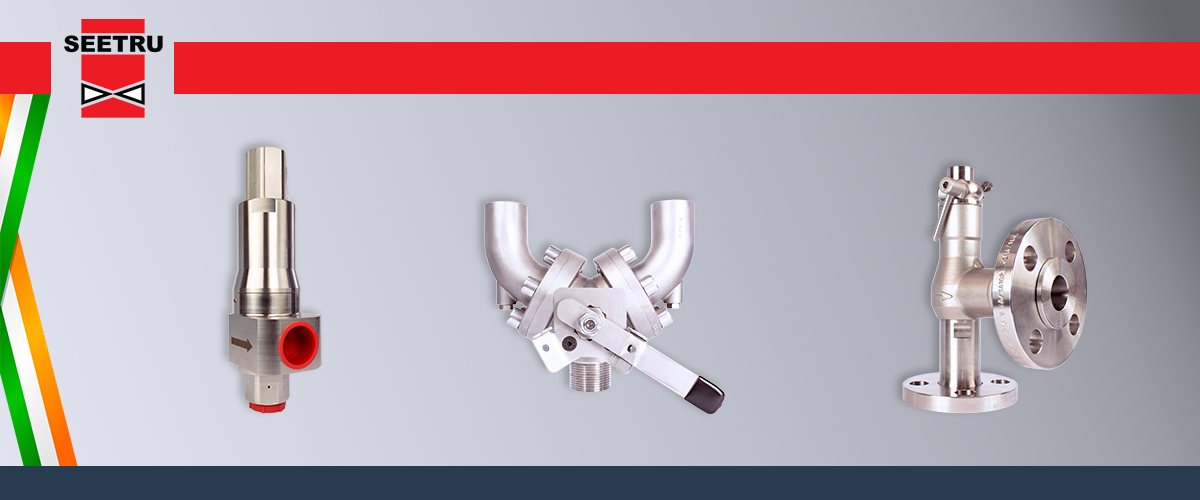
Three stainless steel safety valves: a pressure regulator, a change-over valve, and a flanged safety valve, displayed against a gradient background with a banner representing the flag of India.

Seetru at GH2 India

We see the efforts India is putting into building a cleaner and safer future, which is one of the reasons why we’re proud to be attending the Green Hydrogen Summit this year and support Indian businesses with their green hydrogen projects.

If you’re curious about how Seetru’s safety valves could help you with your hydrogen project’s needs and requirements. Come and see for yourself at GH2 India! We’ll have a small selection of our hydrogen valves available to view. Our valves can cover a range of hydrogen applications and system types, from hydrogen production to storage and more!

The valves that will be on display cover a wide pressure range, from 0.2 bar to 1100.0 bar. Offering solutions for applications across all stages of the hydrogen supply chain. Starting with the Type 95605 / 956H5. A Seetru safety valve engineered for the high pressures in hydrogen filling and dispensing. We have a variant of this valve available for liquid hydrogen applications (contact us for detailed pressure ratings), making it an excellent choice for hydrogen storage and transportation.

At our booth you’ll also be able to see Type 34410, a valve that provides overpressure protection in hydrogen production and compression systems. You’ll also see Type 646, a versatile and all-round solution well suited to compression, storage, and purification applications. Let’s not forget about the Type 946 Flanged safety valve. Made for hydrogen systems with flanged connections. It is easy to install and gives you the stable performance you and your team can rely on.

The valves mentioned won’t be the only hydrogen safety valves we’ll be sharing with you at the Green Hydrogen Summit India. If you’re after something specific or want to talk about how our valves could help you with your hydrogen project. Our team consisting of Kishor Ghungrud and Larita Prescott, will be at Booth D04. Ready to talk with you about hydrogen, answer questions, walk you through our valves, and help you find the right safety valve for your hydrogen applications.

You can also browse our full range of hydrogen safety valves here.


GH2 India FAQs

How do I get in touch with you before any event?

You can reach out to us via email, telephone or fill out the form on our contact us page. If you’re based in India and would prefer to speak with our local representative, please visit our Seetru in India website to find out how to get in touch.

Can I schedule a meeting with a Seetru representative at an event?

You don’t need to, just pop by our stand and a member of our team will be happy to chat!

How can I stay updated on exhibitions Seetru will be attending?

You can find out what exhibitions we’re attending and if we’re attending any close to you by visiting our Trade Shows and Events page.

How can I find out more about the GH2 India exhibition?

You can find out more about the Green Hydrogen Summit India right here, on their GH2 India exhibition and conference site.