
Buying a safety valve testing machine is an investment in the safety of your people, site and pressure systems. That’s why it’s so important for it to match the requirements of your industrial site. Looking at your engineering team, they already have enough on their plate, competing for their time. Valve testing should support their maintenance work, not slow it down.
That means looking beyond pressure alone. Valve sizes, connections, test requirements and portability shape whether the machine suits your safety valves.
Get the fit wrong, and you could create delays or unnecessary spend. Get it right, and testing becomes easier to manage.
What Does a Safety Valve Testing Machine Test?
A safety valve testing machine applies controlled pressure to an isolated valve. It lets engineers check how the valve responds before returning it to service.
One key measurement is set pressure. This is the pressure at which the valve begins to open. Engineers compare that result with the valve’s required setting and allowable tolerance. If it opens too early or too late, further attention may be needed.
The machine can also check reseal pressure. This shows when the valve closes again as pressure falls. Poor resealing can indicate that further adjustment is required from your team, or specialist maintenance, repair or overhaul from Seetru Engineering Services.
Some test benches can also assess seat leakage. Others may offer digital recording, automated reporting or additional test functions. However, those capabilities vary considerably between machines. Bench testing assesses the valve under controlled test conditions. It does not automatically prove every aspect of the wider pressure system.
Before buying, make sure the machine can carry out the tests your maintenance team needs. Some teams may only need set and reseal pressure checks. Others may need leakage testing or more detailed test records.
What to Check Before Buying a Safety Valve Testing Machine
A safety valve testing machine needs to fit your existing maintenance workload. Otherwise, investing in a machine that isn’t suitable can create more work for your engineering team. You could face incompatible valves, additional equipment costs or restricted testing capability. You may also lose time changing setups or outsourcing tests elsewhere.
Start with the valves your team regularly handles. Then match the machine around those requirements.
Pressure Range
Start with the set pressures across the valves you routinely maintain. A machine with insufficient pressure capability will immediately limit your testing options. However, buying far beyond your requirements may add unnecessary cost and complexity.
Look at your current valve range first. Then consider any known changes coming to your site. For example, planned equipment upgrades may introduce valves with different pressure requirements. Allowing for known future needs could prevent another investment later.
However, avoid adding capability purely because it sounds useful. Your machine should reflect realistic maintenance requirements.
Valve Sizes and Connections
A testing machine is of little use if your valves cannot connect to it. Make sure to review the valve sizes and connection types across your site. This becomes especially important when you maintain safety valves from several manufacturers.
You may find similar valves using different sizes or connection standards. Without suitable adaptors, your team could lose valuable maintenance time. That delay may also affect wider work on the pressure system. Check what the machine includes as standard before purchasing. Then review which additional adaptors the manufacturer can supply.
Also consider how easily your engineers can change between connections. Frequent testing can make a complicated setup frustrating very quickly. You want the process as straightforward as possible, as it decreases the potential for errors.
The aim is to cover your common valve range efficiently. You should not need an improvised solution every time something different arrives, within reason, of course.
Test Results You Need
Avoid paying for testing functions your maintenance programme does not require.
Some teams only need to verify set and reseal pressure. Others may require seat leakage testing or detailed electronic records. Your internal procedures can help define those requirements. So can inspection records and any applicable examination requirements. Then compare machines against that list. This prevents a long list of features from driving the purchase decision. Instead, your maintenance requirements determine which capabilities earn their place.
Also consider how engineers will record the results. Manual recording may suit some teams. Others may need digital reporting for easier traceability.
Pressure Supply
The machine still needs a suitable pressure source before your team can begin testing.
Check what supply your site already has available. Depending on the equipment, this could include compressed air or bottled gas. A machine that needs unavailable supporting equipment can increase the real purchase cost. It can also complicate where your engineers can use it.
If the listing is unclear, ask the supplier what pressure source the machine requires. Do this before placing an order. Then confirm your existing infrastructure can support it. Consumption can also become relevant during regular testing. An efficient setup may reduce the amount of test medium required. For mobile work, availability becomes even more important. Your engineers cannot assume every location offers the same utilities.
Where You Need to Use the Equipment
Think about where testing takes place during normal maintenance.
A dedicated workshop may have space for a permanent fixed test bench. Other environments may need equipment engineers can move between working areas. Space is only one consideration. Your team may also need to store, transport and set up the machine. A large, fixed bench can offer greater capability. However, that capability brings little value if your valves do not require it.
Portable equipment can offer greater flexibility for suitable valve sizes and pressures. It can also help teams working across several locations. However, portability should never override technical suitability. The machine still needs to cover your valves and required tests.
Once you understand these requirements, you can compare fixed and portable options properly.
Portable Vs. Fixed Safety Valve Testing Machines
The choice between portable and fixed equipment often comes down to workflow and valve size. Both can support effective valve testing when matched to the right environment and pressure equipment.
A fixed test bench can suit workshops with a steady testing workload. Engineers have one dedicated area for testing, recording results and handling repeat work. This can make frequent testing easier to organise across the maintenance schedule. Fixed systems can also support more advanced workshop processes. Depending on the model, that could include automated reporting or additional test functions. For teams handling larger testing volumes, those features may justify the investment.
Portable safety valve testing equipment offers flexibility in a different way. Your team can move the tester where the maintenance workload requires it. This can be useful when testing demand shifts between areas or locations, especially if you’re working across a large petrochemical or manufacturing plant, for example. A portable setup can also suit teams without a dedicated test bay. Instead of building the workflow around one permanent station, testing can fit around existing maintenance activity.
Ultimately, the best format should support how your engineers work and your site’s requirements. A fixed bench can strengthen a centralised testing process. A portable machine can support a more flexible maintenance setup.
The Seetru Quicktester for Portable Safety Valve Testing
If portable testing is the better fit for your site, the next question is capability. Portability only adds value when the tester can handle the valves you maintain, work with the utilities available and give your engineers useful results.
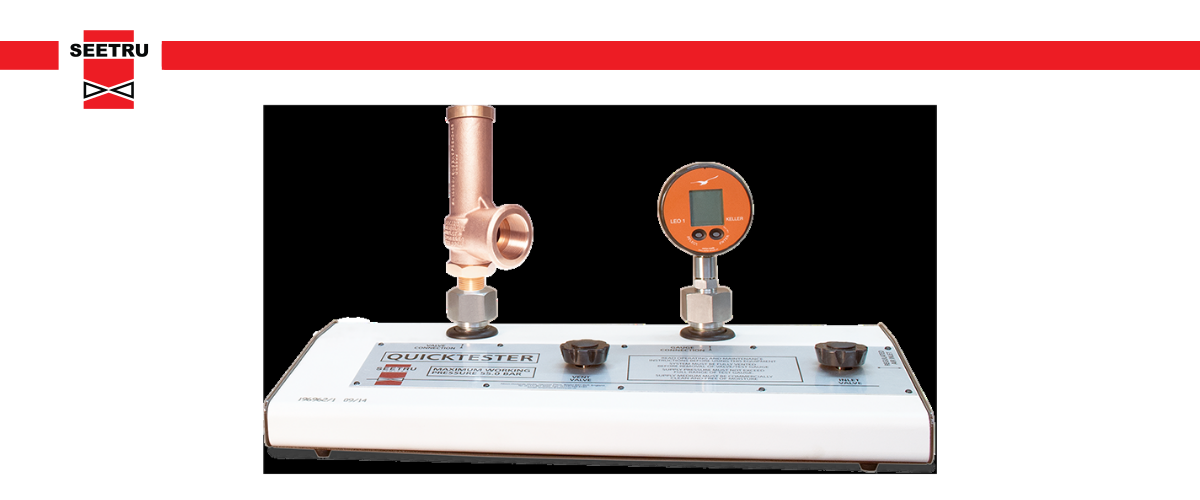
That’s where the Seetru Quicktester comes in. It supports set and reseal pressure checks up to 55 bar, for a wide range of elastomer-sealed safety relief valves. Giving your team and site a compact alternative to a permanent test bench. The equipment is limited to qualifying elastomeric seals only, as they are considered bubble-tight. The principle of the Quicktester is that we feed supply air through a very small flow area into the test equipment, and when the test valve discharges the same volume, a stable pressure will provide an accurate indication of the point on the gauge.
It can use plant-generated air or bottled gas as its pressure source. This gives sites more flexibility around the utilities already available. It also uses relatively little supply medium, which can be useful where bottled gas is the practical option. However, any supply air should be via a pressure regulator. Adjust this to supply 10% above the set pressure of the valve being tested to ensure an accurate indication of the test valve set pressure.
Connection flexibility can help reduce setup time between valves. Our safety valve testing machine comes with standard adaptors covering ¼ inch to 1 inch BSP connections, while further BSP adaptors are available up to 2 inches. Should you need NPT adaptors, they are available upon request. This gives one machine greater coverage across compatible threaded safety valves.
Of course, the Quicktester will not suit every safety valve. However, it can work alongside a fixed test bench when portability is needed elsewhere on site. If transporting a removed valve to a fixed testing area is impractical, a portable tester can give your team more flexibility. Valves above 55 bar will need another testing solution. Larger flanged valves may also require different equipment. Seat leakage testing or automated reporting may need greater capability too.
That does not make the Quicktester an alternative to every fixed bench. It gives your team another testing option where portability adds real value. Used alongside existing testing equipment, it can help you extend testing capability across more areas of your site.

What Happens If a Safety Valve Fails Testing?
A failed test does not automatically mean the valve needs replacing. First, your team needs to understand what caused the result.
If the valve opens too early, it may lift before protection is required. That can interrupt the process and release pressure unnecessarily. If it opens too late, the system may exceed its intended protection point. Resealing problems tell you something different. A valve may lift correctly but fail to close properly afterwards. That can lead to continued leakage, pressure loss or unwanted media release.
The valve’s physical condition can reveal further problems. Corrosion, damaged sealing surfaces or worn components may affect its performance. Engineers may only uncover some of these issues during inspection or overhaul. From there, the next step depends on what the valve actually needs. Adjustment may be enough in some cases. Other valves may need specialist maintenance, repair or overhaul before returning to service.
Our wider lifecycle support gives your team more than one route forward. We don’t only design and manufacture safety valves, change-over valves and auxiliary valves. Through Seetru Engineering Services, we also support maintenance, repair and overhaul across your valves’ lifecycle.
Our SES technicians are ASME certified and ready to help you with valve inspection, maintenance, repair and overhaul. This gives your team a cost-effective option where replacement may be avoidable. However, should repair or overhaul not be suitable, we can support you with replacement too. Be it through us here at Seetru, or through LESER UK, depending on what you require. If your safety valve testing machine shows that something is wrong, your team has a clear route from further assessment to repair, overhaul or replacement.
Find the Right Safety Valve Testing Equipment for Your Site
You should not have to piece together suitability from product specifications alone. Before investing, speak to us about the valves your team handles.
Share the valve types, connections, and testing requirements you work with. We can also discuss your existing setup and how our safety valve testing machine fits into your valve maintenance. The more context you can provide, the better we can assess how the Quicktester could support your team. Part of that assessment is your valve sealing arrangement, as the Quicktester is designed for soft-seated safety relief valves and isn’t suitable for metal-to-metal seal valves.
If it suits your requirements, we can help with the complete setup. That may include additional adaptors, pressure gauges or other optional equipment. The Quicktester may also complement equipment you already have. For example, a fixed bench may remain your main workshop setup. A portable tester can then support work elsewhere across the site.
If the Quicktester does not suit a particular requirement, tell us that too. We can discuss the options available rather than forcing one solution onto every valve. Our goal is to help you find a safety valve testing machine that supports your maintenance work and site requirements.
Take a closer look at the Seetru Quicktester for portable safety valve testing.
FAQs
Pressure equipment supplied in Great Britain may fall under the Pressure Equipment Safety Regulations 2016. The Pressure Systems Safety Regulations 2000 may also apply to qualifying pressure systems and their protective devices.
Where required, a Written Scheme of Examination must cover the relevant protective devices and specify the nature and frequency of examination. Testing equipment such as the Quicktester can support those checks where its capabilities suit your requirements, but it does not replace your site’s regulatory responsibilities.
The Quicktester is manufactured under a quality management system compliant with ISO 9001, a globally recognised standard for quality management. This means its manufacture follows controlled and documented processes designed to support consistent quality.
There is no useful one-size-fits-all calibration interval for every testing setup. The interval should reflect the equipment, usage and required accuracy. UKAS guidance recommends considering manufacturer instructions and relevant test standards. Previous calibration performance and equipment stability can also influence the interval.
Frequent use, suspected damage or unstable results may justify earlier checks. Your quality procedures may also set specific calibration requirements.
Rental can suit short-term projects or occasional testing requirements. Availability will depend on the manufacturer or specialist equipment provider. For regular testing, ownership can give your team more control over when testing happens.
You are not relying on hire availability, booking windows or equipment arriving when maintenance is already underway.
That can help reduce delays during planned maintenance or shutdown work. It also means your engineers can become familiar with one testing setup, rather than adapting to different hired equipment each time.
If shutdown preparation is already part of your maintenance planning, you may also find our article on Don’t Gamble with Contractors for Your Annual Shutdown Maintenance useful. If safety valve testing is part of your routine maintenance workload, purchasing equipment such as the Quicktester may offer a more practical long-term option.